

Building multiple income streams with Veshali Patel
An interview with someone who's been there and done it; we talk about maths skills, living in Cyprus and so much more.

Welcome to the second ever Money Brunch interview!
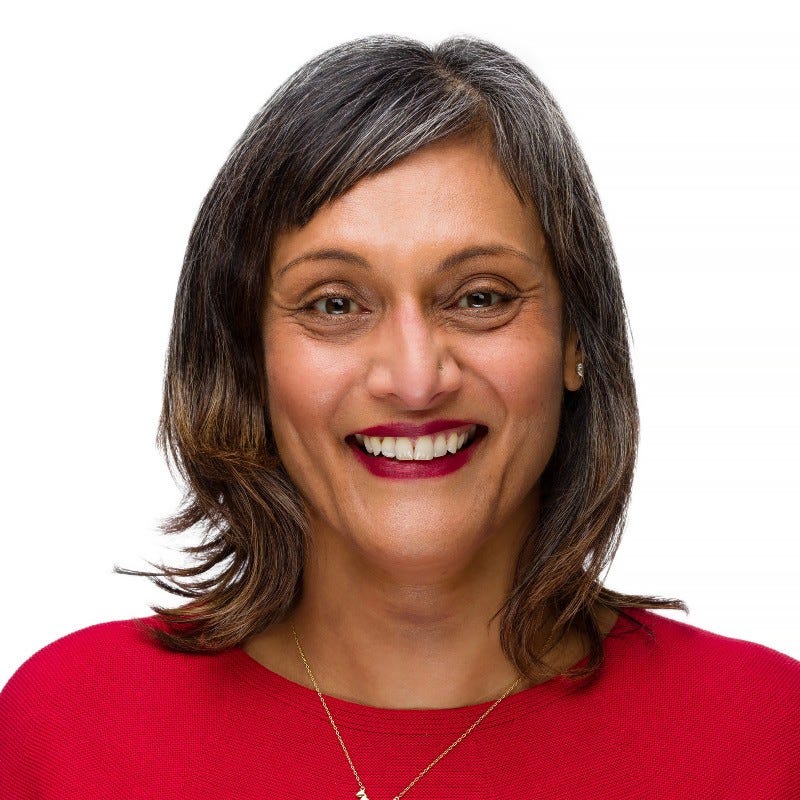
Meet Veshali Patel
We met at a networking event a couple of years ago. I mentioned the idea I’d been working on (the precursor to Money Brunch) and, later in the evening, she connected me with someone else who was equally passionate about democratising access to financial information. This person (Malavika) then became a collaborator of mine!
Since then, Veshali has been a core member of the Money Brunch community, sharing her knowledge and experience freely and openly. She’s become a role model for me personally so I had to invite her to be interviewed for this series.
To start
What’s your coffee order?
I start my day with a cup of tea, but since this is a little later, I’m going to go for a latte. A milky coffee to keep me going.
OK, let’s start off with making money. What was your first job?
I started out doing a paper round, and at 15 I progressed to working in my friend’s uncle’s fruit and veg shop on Saturdays. My goal was to save enough money so that I could get contact lenses; I’d had glasses since I was five, and I just wanted to get rid of them! In those days, they were a lot more of an investment than they are today.
I’d work shifts in the holidays too. And then when I got to 16, and got my National Insurance number, I got a job in retail, at Debenhams. My shifts were Thursday evenings, and Saturdays.
That got me through college and university. My parents taught me that I had to pay for the things I wanted, not the things I needed, like clothes and any other extras - and that’s an approach I’ve taken with my own kids as well.
What was your first ‘proper’ job?
After university, I joined a small accounting practice. They were just starting to use tech and needed someone who could help them with that, so that’s where I got my first contract.
Why accountancy?
At college, I’d taken a really keen interest in it. I liked the numbers (but I’m not saying I’m good at maths!). It made sense to me and felt like it would be a solid career - which has now proven to be true.
What did you do with your first proper paycheque?
I can’t even remember! My husband knew straight away what he’d done - he took his dad to the jeweller’s and bought his mum a ring.
I probably paid off some student loans or credit cards. Nothing exciting but I knew that I had to pay that debt down, and that was my biggest focus then.
For brunch
What’s your brunch dish of choice?
Sourdough bread with some avocado and scrambled eggs on top. Or poached eggs. Then I’m done. I’m satisfied.
When did you start investing?
Too late. Back then there wasn’t the internet with accessible information, and you didn’t know what you didn’t know. I knew that I should save, but then I had a lot of debt as well. So I was just focused on clearing that.
I learned from my husband and brother-in-law, who were way ahead of me in terms of knowledge. I had never thought about a pension and investments before that.
If you’re never exposed to it, then you don’t know.
For my parents’ generation, saving money was making sure you put it in a bank account, saved it, and didn’t touch it. It wasn’t about making money work for you. It was about providing comfort, if something happened, they know it’s there to support them.
I think my dad bought some shares in the 80s, when privatisation was happening.
It’s really interesting when you think about that time. There were campaigns getting people to buy shares in these companies that were becoming privatised - like BP, BT, BA and banks - but I feel like they didn’t understand what was happening and how it worked. Especially beyond those companies, and the wider stock market.
It seemed like a ‘getting on the bandwagon’ sort of thing. It’s paid off now; those shares are worth more, but they couldn’t make a calculated risk assessment at the time.
What was your first investment?
It would have been an ISA, when they first came out. But, as I said, my focus was clearing debt. I didn’t know about 0% interest credit cards for balance transfers; again, it was something my husband got me to do!
Investing more requires more income. What was your career journey like?
I knew I wasn’t going to have a ‘job for life’ - that didn’t happen after my parents’ generation. But I knew that I’d move after finishing my exams, as there wasn’t any career progression within the firm I was in.
I know now that once you have a bit of experience, you should move. Just change jobs. No one looks at how long you’ve been at a job.
My husband was changing jobs frequently - each time he sat an ACCA exam or passed a paper, he was moving. This helped him build his career and progress upwards, faster - whereas I just stayed with them until I was fully qualified.
When I did move I doubled my salary, and was able to quickly clear all my debt - because I was getting paid an amount I didn’t even think was possible. And then moving after that, I kept earning so much more, that I could then invest.
Now we’re at the point where, by December, everything [ISA and pension allowances] are maxed out. Because we know the value of compounding, and time, and consistency.
What made you start your own business?
We moved to Cyprus when my son was six months old. I started going a bit stir crazy in those early months, so got a role at KPMG. After my daughter was born, I planned to go back - but it was the middle of the [2008] crash.
I then got involved with a corporate services company - who offer multiple services (like legal advice, recruitment and accountancy) for companies setting up in Cyprus (because of the favourable tax regime there).
After 18 months we were looking to come back to the UK, and I was thinking about how to work and parent.
One of my friends set up a business, and I helped him with the accountancy side of things. By then, the industry was becoming a lot more digital. And he put me in touch with people who would be willing to come on as clients of mine.
Timing-wise, it worked out perfectly. I had to get a certificate from the professional body to certify that I was qualified enough. It needed 3 years of post-qualification experience - and I had 18 months at KPMG, and 18 months at the corporate services company. And I was certified, and ready to set up six months after we moved back to the UK.
It was a small, lifestyle business, initially, while the kids were little. Having been in Cyprus for five years, we were now financially stable. And if the business didn’t work out, it wouldn’t have made an impact on our day-to-day lives.
As the kids got older, and didn’t need me so much, I was able to turn it into a proper thing.
I started networking more, going out in the world, sorting out pricing, having just a change in mindset. And that’s been quite a big change for me in the last three years. All the clients that were with me initially moved on, because my pricing structure changed. I’ve streamlined how I run the business, by using a lot of tech, and it’s working well. I get a lot of referrals through networking, and people I know - and it’s just about continuing to put myself out there.
What do you wish you’d known either when you were starting the business - or when you were getting serious about making it bigger?
People buy from people. You can’t just run your business from your computer.
You have to network - even if it’s uncomfortable. You never knew anyone when you started at school. And you would have ended up with at least one person as your friend. That’s how I look at it. You can do it again when you go to a networking event.
You also need to find the people that are on the same path as you are. Either they’ve gone before you or are behind you, and that’s the best place to be because you can help the person behind you, and learn from the people ahead of you.
To finish
To wrap up, would you like a dessert? A drink? Something else?
A pastry. A good old Ole & Steen cinnamon social. [Ole & Steen is where most of our Money Brunch sessions take place]. It’s just too addictive.
How do you decide what’s worth spending money on, versus what’s not?
I won’t spend like it’s going out of fashion, but won’t restrict myself too much either. I’m at a stage in my life where I’m more comfortable, and if I lost my business, I have other streams of income to rely upon.
I turned 50 this year and shiny objects don’t interest me anymore. As long as it does the job, I’m fine.
What’s the best thing you spent money on recently?
Holidays. I’ve done loads of trips this year, and I’m really pleased with that. I’d rather spend money on experiencing new places, than having physical things! Memories last longer.
What about your kids?
When my kids turned 18, their grandparents gave them a sizeable amount - via cheque. They still use cheques; they’re not using the computer! My eldest doesn’t drive, so didn’t need a car, but we talked about investing some of it, and for him to see how it works. Start building up an exposure to it.
He was asking about mortgages the other day, and how they work. And he’s only 19.
So it seems to be working!
It’s that concept of saving, which is that saving doesn’t just mean keeping money in cash. It means investing too. And investing beyond property.
And it’s easier to do things nowadays! When I was younger, you had to call your pension provider to contribute more, or switch fund, and fill out paperwork. Or have an IFA do it for you.
It’s a lot easier to make financial decisions now - even wrong ones. But knowing that even if you make a wrong move, there’s another one along the line that will even it out.
How do you see yourself changing how you manage your money in the next 10, 20 years?
Until now it’s been about working hard to build up multiple streams of income. In addition to our jobs, we have a portfolio of rental income, we’ve got our investments, we’ve got the pensions. We’ve got enough to sustain the life we have.
Now it’s about spending it all.
“Decumulation mode”.
Exactly. My husband’s going to be retiring soon; I’ll still keep working because I can run my business from anywhere. But I don’t have to.
Our kids are going to be able to support themselves in the next few years. And inheritance rules are changing. It’s about making sure that we’re comfortable and can still sustain the same kind of lifestyle that we have now.
It’s an exciting time for us.
The point about your kids is an important one. Yes, people are being pushed to spend the money they’ve worked hard for, to avoid inheritance tax. But you’ve set your kids up for success, so they’ll be more than fine.
It’s not just about just leaving them with money; it’s equipping them with the knowledge and the confidence to take risks. Now is when they can afford to make those leaps, fail quickly, learn from it, and move on.
When you get to our age, we haven’t got much time to be taking risks. It’s what you do with your pensions - you’re high risk in the earlier years, and then that flips later in your life.
We’re still up for looking at investments, but we would be a bit more risk averse. Whereas my son doesn’t have that; he can afford to be risky because he’s got the time to wait.
What’s one of the things that people assume about your work or life that’s completely wrong?
People think I’m good at maths. My maths is crap!
My work isn’t about pressing buttons on the calculator or doing a spreadsheet. It’s actually understanding what does that spreadsheet actually mean. And having those conversations with business owners.
Final question - you’ve been paid £10,000 (post tax) for doing this interview. What are you doing with it?
I’d give some to my kids to see what they’d do with it. And go on a trip too.
Thank you so much for your time.
This has been great. I always love talking to you about money!
Veshali is the founder of Pinnacle Advisory Services.
To find out more, visit her website or find her on LinkedIn!
Support for this letter comes from you!
Get in touch about a partnership.